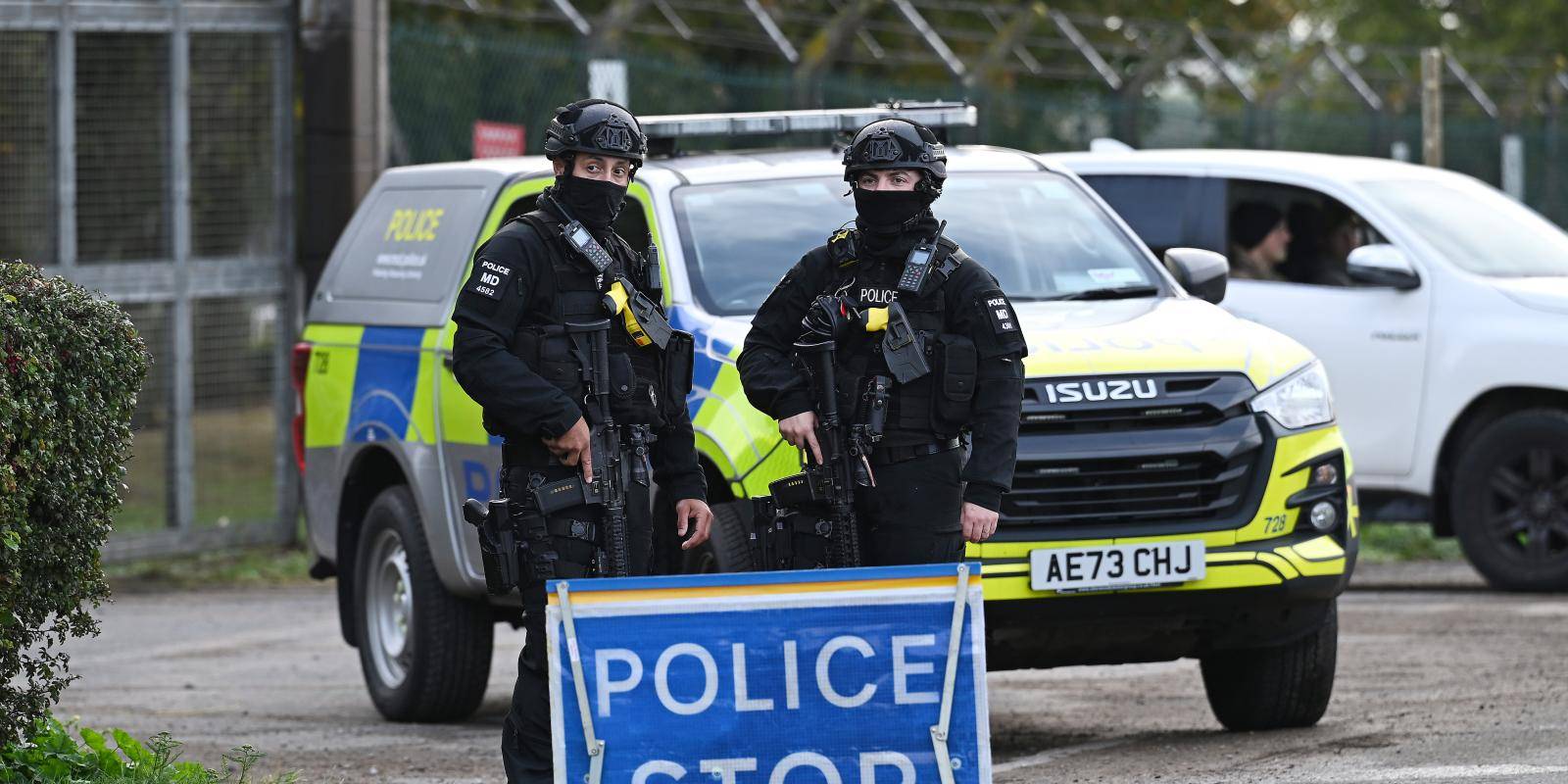

The US’s withdrawal of its bombers from RAF Fairford, following a suspected terror plot against the base, has brought attention to how the UK defends its homeland military bases and other critical infrastructure.
The UK government has insisted RAF Fairford is safe following the arrest of five men near the base on 27 September. President Donald Trump said the US withdrew its bombers from the base because of an unspecified ‘threat’ to the base.
The investigation into the incident is still ongoing. Prime Minister Andy Burnham said that there are ‘strong indications that Iran played a part,’ which Iran’s embassy in London has rejected. In March, the UK approved a US request to use RAF Fairford for what it described as defensive strikes on Iran. Tehran responded that any base used for ‘aggression against Iranian territory’ would be a ‘legitimate target’ for its forces.
Bases such as Fairford have their own protection forces that guard the perimeter. But incidents like this highlight the need for the UK to improve its wider homeland defence forces in the face of sustained pressure from hostile actors such as Iran and Russia.
While the UK has specialist counter-terrorism units that can respond to incidents, and its armed forces and reserves can be deployed domestically to aid civil authorities in a crisis, it lacks a specialist domestic-only force that could protect a wider range of sites for a longer period.
Response versus protection
The Fairford incident is just one example of the various hybrid threats facing the UK. Alongside Iran, Russia in particular poses a major threat. The Cabinet Office recently announced it would brief the chief executives of UK critical national infrastructure providers and defence firms on the ‘enduring and significant threat’ from Russia.
Danish intelligence has also warned that Russia could mount a limited military attack against a NATO member within months. Across Europe, states have attributed drone incursions, arson and sabotage to Russia.
Protecting domestic sites is different to identifying the perpetrators or deciding on retaliatory measures. These happen after an attack; protection must be in place before one. This requires forces built for protection, not just response – which is what some UK allies already have.
Poland and Finland’s approaches
Poland and Finland have both taken a structural approach, creating forces whose primary purpose is the defence of their own territory.
Established in 2017, Poland’s Territorial Defence Force is the fifth branch of its armed forces. Recruited locally and organized around a brigade in each province, it remains in its own province when Poland mobilizes its forces, rather than reinforcing the regular military. Its stated tasks include protecting critical national infrastructure.
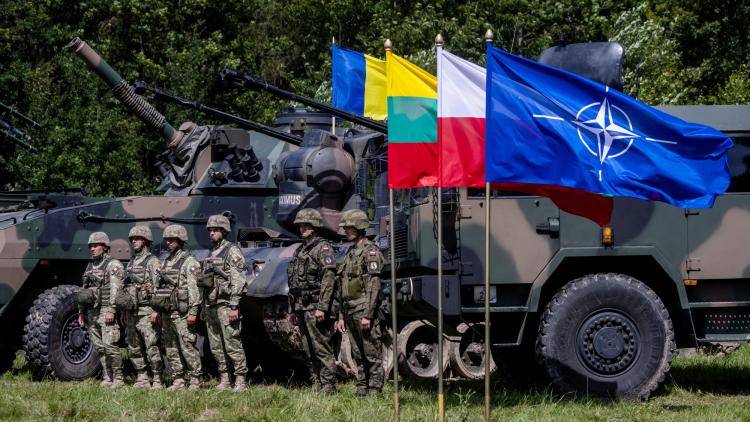
Finland’s approach is broader. A permanent security committee coordinates preparedness across government, working from a list of key functions that the state must keep running in a crisis such as water, energy and transport. Military and civilian planning sits within a single framework rather than separate departments. The premise is that defending the home territory is a permanent task, rather than a contingency to be activated during a conflict.
Neither of these two models directly transfers to the UK. Poland’s territorial force reflects its position bordering Belarus and Russia’s Kaliningrad. Finland’s rests on conscription and a political culture influenced by its long border with Russia.
However, the principle beneath both examples is transferable: protecting home territory requires forces raised specifically for the task, not carved out of regular forces each time they are needed.
The UK has currently not adopted this principle. It does not have a dedicated force assigned to protecting a wide set of UK sites for a long period.
Architecture without dedicated forces
The UK is not starting from scratch.
The Cabinet Office runs the Home Defence Programme, a cross-government effort to align military and civilian planning for threats to the UK. The 2026 Resilience Action Plan implementation report said the programme was being accelerated, with updated crisis response protocols and a planned national home defence exercise in 2027. The Ministry of Defence (MOD) has a Director of Homeland Defence and Strategic Threats. Standing Joint Command is the MOD’s operational headquarters for UK resilience tasks.
A report published in January by researchers at the University of Exeter set out what this architecture lacks. The report argues that home defence activity is fragmented; that no lead department holds a mandate with executive tasking authority and adequate resources; and that the UK is at a standing start while allies including Finland, Poland and the Baltic states are years ahead. Its recommendation of a designated lead department is a good starting point.
However, even if these recommendations were implemented, a mandate does not produce troops. The UK has a reserve force. But alongside maintaining the UK’s own defence and resilience, this force is also expected to contribute to NATO’s collective defence and can be deployed abroad.
Relying on the same reservists for both tasks only works while these two demands do not arrive at the same time. UK land forces are designed on the assumption that they will be deployed abroad, rather than defend domestic sites. In a crisis on the European continent, the task of domestic protection would not disappear. It would compete with the demand for British land forces to be deployed elsewhere.
Three changes the UK should make
Three changes follow. The UK should base its approach on the Polish design principle. This means setting up new reserve sub-units with a purely domestic protective role, recruited and based locally. These new units would be positioned near the bases and critical national infrastructure most likely to attract attention, and not counted as reinforcements for deploying formations elsewhere.
The new units would not replace existing forces. Guard forces such as the MOD Police and the Military Provost Guard Service, along with the RAF Regiment for air bases, would remain responsible for perimeters and immediate site security. And specialist units would still respond to incidents.
Instead, the new units would do what the existing forces are not designed to do: secure non-military critical infrastructure, cover the ground beyond the perimeters, and protect multiple locations during a period of heightened threat. They would be designed to hold these sites for periods of months rather than days.
This does come at a cost. Every reservist given a home defence role is one fewer available for deployment, and that is a real reduction in what the UK can send abroad. But in a situation when both home defence and overseas demands occur, the choice of home defence will need to be prioritized by default. Making that choice deliberately now means the force is generated and ready before that happens.
From Finland, the UK should take the treatment of homeland protection as a permanent function rather than a contingency. This means protecting a budget for it, since activity funded from training and readiness budgets is vulnerable when defence budgets are squeezed. The British Army has already reportedly been told to suspend major exercises this year for lack of funds, and in September it was reported that army reservists are set to serve fewer days because of budget cuts.

Finally, the UK’s distribution of its protective forces should follow from the government’s decisions and the threats those decisions potentially attract, rather than from isolated incidents. When the government permits an operation from British territory, as it did at Fairford, it should decide the protective requirements at the site and its surrounding areas at the same time.
The UK has the intelligence capability and the legal framework to protect its domestic sites. It also has the beginnings of a coordinating structure, though it needs a clearer lead. What it now also needs is a dedicated force assigned to protecting those sites across the homeland.