Prior to the US–Iran conflict, global biofuel production was projected to increase moderately over the next decade by between 0.9 per cent and 1.4 per cent per year. The vast majority of that growth in biofuel demand (80 per cent) was expected to come from emerging economies such as Brazil, India (both ethanol) and Indonesia (biodiesel). However, based on new policies and blending mandates announced since the beginning of the war, some projections now show global biofuel production rising by 11 per cent annually between 2025 and 2030.
The speed at which biofuel mandates are being increased in response to the fuel crisis creates significant risks, as demand for feedstocks may rise faster than environmental safeguards, certification systems, land-use planning and enforcement mechanisms can be implemented.
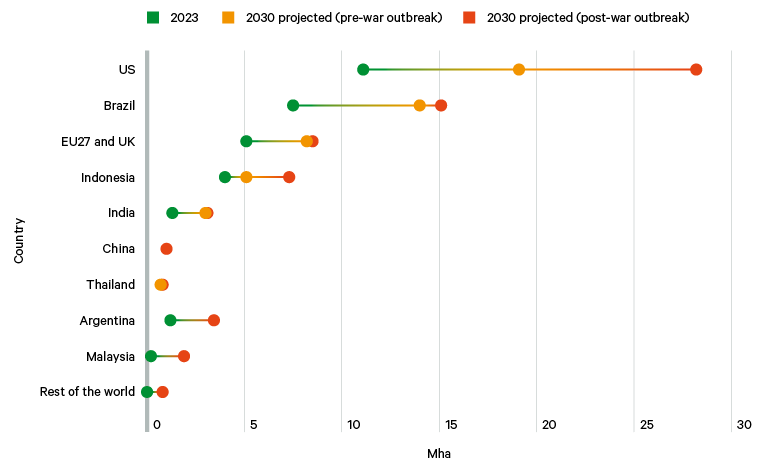
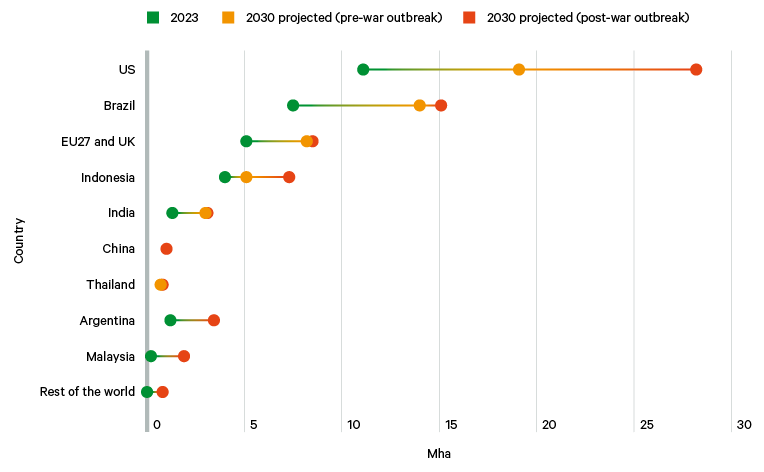
If the increased biofuel mandates proposed in response to the Hormuz crisis are fully implemented, the amount of land required by 2030 could more than double, with 36 million hectares being added – similar in size to Germany.
The area used globally for growing biofuel feedstocks in 2023 was around 32 million hectares. Around 20 million hectares are already expected to be added to this total by 2030 – an area the size of Uganda. However, if the increased biofuel mandates proposed in response to the Hormuz crisis are fully implemented, the amount of land required by 2030 could more than double, with 36 million hectares being added – similar in size to Germany (Figure 2).
The most consequential mandates are being proposed in major biofuel-producing countries, notably Brazil, India, Indonesia and the US. If these expanded mandates result in additional lands being brought into production, both those lands and existing agricultural land will be farmed more intensively. Indonesia, in particular, risks further deforestation if the area of feedstock plantations was to expand, either directly or indirectly, by displacing existing agricultural production.