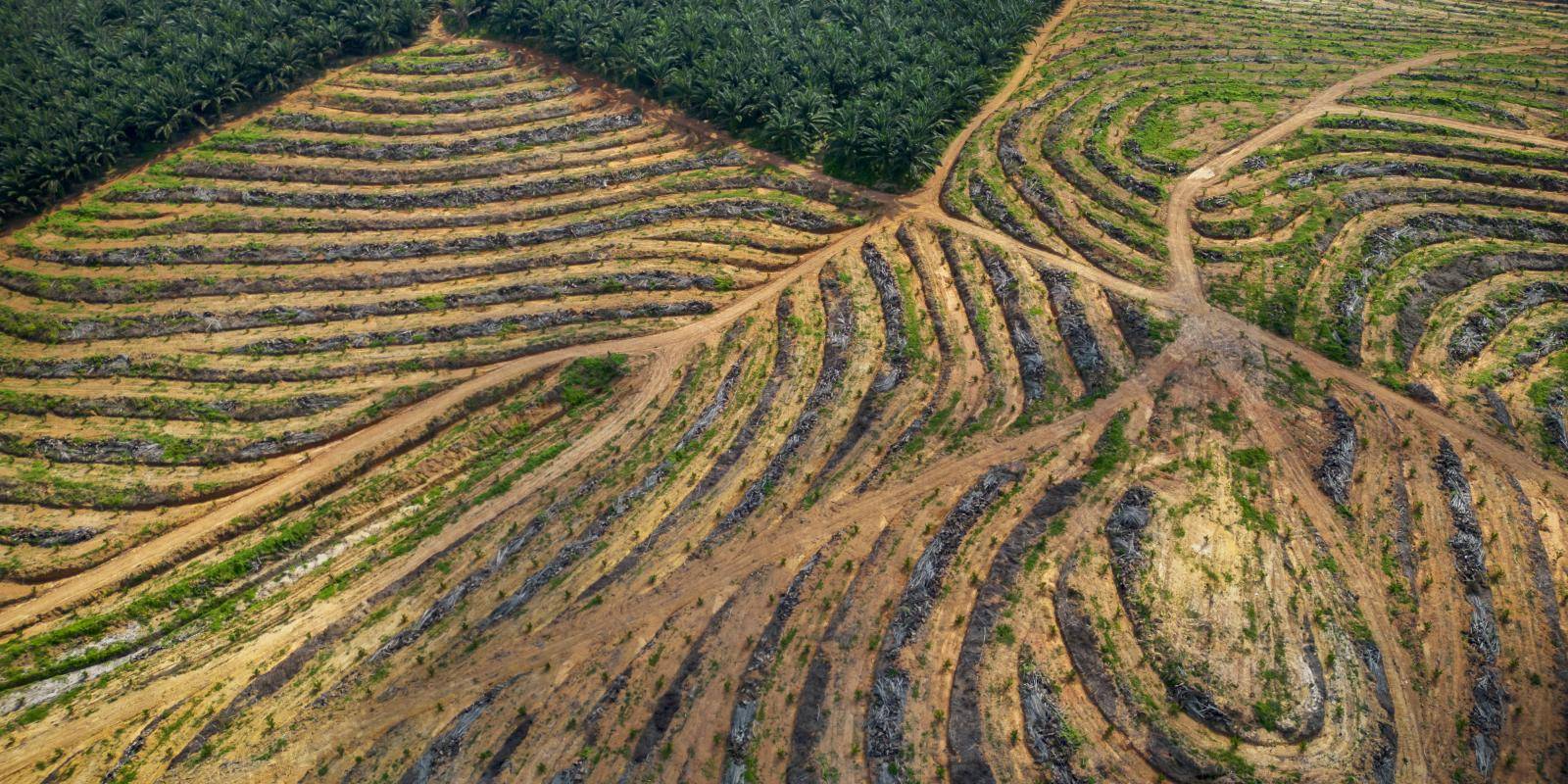
As governments grapple with the effects of the US–Iran conflict and the subsequent fuel crisis, they are increasingly turning to biofuels as a potential solution to the problem of energy security. However, a push for biofuels to replace the demand for Gulf oil could have significant negative, longer-term consequences for food security, land use and deforestation. Policymakers from energy, agriculture, transport, environment and trade ministries in the most affected countries must therefore coordinate to avoid such scenarios and to encourage more resource-efficient energy use.
Our paper recommends the following responses:
Policy recommendations
Implement measures to curb energy demand in the immediate term, particularly those aimed at increasing energy efficiency. Instead of trying to meet demand by increasing biofuel use, governments can target reductions in demand. Energy efficiency measures recommended by the IEA include incentivizing the use of public transport and car sharing, and encouraging people to avoid non-essential travel. Measures like these can help to cut oil-fuel demand quickly without reducing productivity or increasing pressure on food-crop production, forests or land.
Avoid locking in large-scale, crop-based biofuel systems that incentivize land-use conversion. Decarbonization of grids through renewables and electrification should remain the priority policy for road transport where it is economically and technically feasible, while biofuel use should be targeted to sectors without viable market-ready alternatives (such as heavy goods transport). Measures should also be time-limited and governed by strict sustainability safeguards.
Prioritize food production over biofuels to protect the food security of the most vulnerable populations. New energy security strategies should classify biofuels by both their food-security risk and their impacts on sustainability, rather than treating those risks as a single category. Biofuel mandates should be adjusted accordingly. Existing legislation excluding certain food crops from use in biofuel production is key and should remain in place.
Apply a ‘productivity and circularity first’ approach before further raising biofuel mandates. Increases in the share of biofuels in the fuel mix should be approved by governments only where there is credible evidence that additional demand can be met through higher yields on existing and degraded land, waste- and residue-based fuels, advanced second-generation biofuels, or other, low-impact feedstocks (e.g. sugar cane bagasse or palm oil mill effluent). This approach could also include prioritizing fuels made from hydrotreated vegetable oil – a paraffinic renewable diesel that can be produced from waste oils, animal fats or used cooking oil. Such fuels generally have lower land-use implications than crop-based biofuels.
Share information on best practices and lessons learned. Countries with long-standing biofuel experience, particularly Brazil, have developed extensive policy and market systems around ethanol and biodiesel, and are well placed to assist others with nascent biofuel industries. However, biomass resources, agricultural systems, ecosystems, water constraints and land-use pressures vary between countries, meaning that approaches that have worked in one context may not deliver the same results in another. Information exchanges should therefore focus on identifying transferable principles rather than whole-country models. Examples of such principles include, among others, sustainability safeguards, feedstock traceability, productivity improvements and clear limits on land conversion.
Align national bioeconomy and circular economy strategies, particularly in situations where rising demand for biomass for energy is combined with limited supplies of agricultural and forestry residues. Policymakers must ensure resource-efficient use of bioresources. Biomass should be prioritized for higher-value economic uses such as food, feed and materials first ahead of energy. Maximizing the use of residues, wastes and byproducts would embed circularity in bioeconomy planning, while reducing pressure on land, forests and food systems.
Increase coordination between departments when updating existing bioeconomy strategies. Bringing together ministries responsible for energy, agriculture, environment, trade, industry and food security would help break down policy silos and ensure that bioenergy development does not undermine food systems, forests or ecosystem protection.
Add binding land-use ‘guardrails’ on the use of biofuels to national bioeconomy strategies. Such provisions are largely missing from existing strategies. Guardrails should include clear limits on the share of biofuel demand to be met through land expansion. The International Advisory Council on Global Bioeconomy could facilitate a common approach to developing rules to prevent the conversion of forests, peatlands, savannahs and other high-biodiversity ecosystems into plantations.
Identify early signs of staple crop decline and risks to national and regional food supply before harvests. National agriculture ministries and international agencies such as FAO must improve real-time understanding of planting decisions, harvest forecasts and demand expectations in response to input- and commodity-market and weather-related disruptions. The market-monitoring and rapid-response functions of the Agricultural Market Information System must be fully resourced to improve market intelligence and coordination across major producers, with an increased focus placed on integrating these systems with existing food-security early warning systems. Coordination should be expanded to include other multilateral forums, ensuring that policy-driven import restrictions on biofuels do not adversely affect supply shocks for food security elsewhere.
Plan land use at the landscape level. The most suitable option in any given landscape will depend on many factors, such as the size of landholdings, access to resources and acceptance by landholders and local communities. Agroforestry – a landscape management system where trees are intentionally integrated with agricultural crops – is one of the most feasible bioeconomy options across multiple dimensions. While agroforestry will not remove all risks associated with biofuel expansion, it can form part of a more sustainable bioeconomy strategy by improving land productivity and maintaining biodiversity. The environmental, social and economic benefits are well documented and involve relatively few trade-offs compared with monoculture crop plantations. Agroforestry can help reverse the usual pattern of land-use change by bringing trees and forest functions into cropland, rather than replacing forests with crop production. As such, it can help make biofuel and wider bioeconomy pathways less harmful by reducing reliance on large-scale monoculture expansion.
Strengthen national-level certification and traceability systems to help ensure that higher biofuel demand does not translate into renewed land conversion. Certification can play a key role to screen out high-risk land conversion. Strong certification schemes can provide evidence that feedstocks are not produced on recently deforested land, peatlands, wetlands or other high-carbon and high-biodiversity areas. Malaysia’s palm oil certification and traceability scheme, for example, has helped improve oversight of production practices and reduce land-use risks by making producers’ participation mandatory and providing support for smallholders to comply with sustainability standards. Such systems will need to be further upgraded to deal with rising pressure to increase biofuel mandates in response to the current fuel crisis.
Ensure that standards and certification processes differentiate between feedstocks for biofuels. Better criteria are needed to distinguish between residues and primary biomass resources. High-value biomass should not be reclassified as ‘residue’ simply to meet biofuel demand. Waste- and residue-based feedstocks should not be treated the same as crop-based fuels with higher land-use risks. However, while waste and residues should be prioritized, they cannot be treated as unlimited resources. The International Sustainability & Carbon Certification system (ISCC), for example, has developed certification approaches which can be expanded on. The inclusion of land-use-change accounting in certification requires further work. One solution to the problem of indirect land-use change (ILUC) would be for certification to go beyond farm-level compliance and adopt so-called ‘landscape approaches’ (meaning place-based frameworks that manage land to balance competing social, economic and environmental demands) – an example being agroforestry practices (see above). These approaches can better account for ILUC and displacement effects. Certification and assurance systems for agroforestry and wider landscape approaches should make greater use of new technologies, including satellite monitoring, geospatial land-use planning and digital traceability systems.
Require parties to the Convention on Biological Diversity (CBD) to assess biofuel and wider bioeconomy policies within their National Biodiversity Strategies and Action Plans. Assessments should include the impacts of biofuels on forests, peatlands, food security, water use and ILUC. In 2012, the CBD Conference of the Parties (COP) recognized the need to ‘promote the positive and minimize the negative impacts of biofuel production and its use on biodiversity and the livelihoods of indigenous and local communities’. CBD COP 17, due to be held in Armenia in October 2026, should treat this rapid expansion of biofuel mandates as an emerging land-use and biodiversity risk. Under the Kunming-Montreal Global Biodiversity Framework adopted at CBD COP 15, member states committed to identifying and eliminating, phasing out or reforming incentives – including subsidies – that are harmful for biodiversity by 2025, while expanding positive incentives for the conservation and sustainable use of biodiversity. Parties to the CBD must ensure that any policy support for increased biofuel production is consistent with this target.
Develop clear guidance on sustainable biomass use to help ensure that biofuel expansion does not undermine biodiversity targets, ecosystem restoration or anti-deforestation commitments. Such guidance would help countries to align their energy-security responses with the Kunming-Montreal Global Biodiversity Framework, and prevent short-term oil-crisis measures from locking-in long-term pressure on land and ecosystems.
Include long-term structural incentives in policy frameworks to guarantee product origins and prevent fraudulent activities from driving up deforestation and unsustainable land-use changes. Improvements to technical trade codes providing more granular understanding of biofuel supply chains could support this by strengthening supply-chain transparency. The EU has developed one of the most advanced policy frameworks for addressing the land-use impacts of biofuels, particularly through its rules on ILUC. RED III places limits on biofuels with high land-use risks, bioliquids and biomass fuels, and seeks to phase out support for feedstocks associated with expansion into high-carbon land (notably including palm oil and soybeans). RED III will be supported by the EU Deforestation Regulation (EUDR), which requires due diligence and traceability for deforestation-risk commodities and their derivatives. The EUDR is due to come into force at the end of 2026.
Renew cooperation between governments, producer countries and industry on the development of robust ILUC accounting, traceability and deforestation-free requirements. The current energy crisis and renewed push for biofuel mandates underline why such methodologies and policies matter. If energy shocks encourage countries to expand crop-based biofuels quickly, these measures become essential to prevent policies aimed at improving energy security from shifting environmental costs onto forests, peatlands, food systems and biodiversity. Criteria within these requirements should be made more practical, transparent and implementable by setting clearer, more consistent rules on what counts as forest loss, targeting verification efforts by supply-chain risk, and reducing the reporting burdens faced by smallholders.