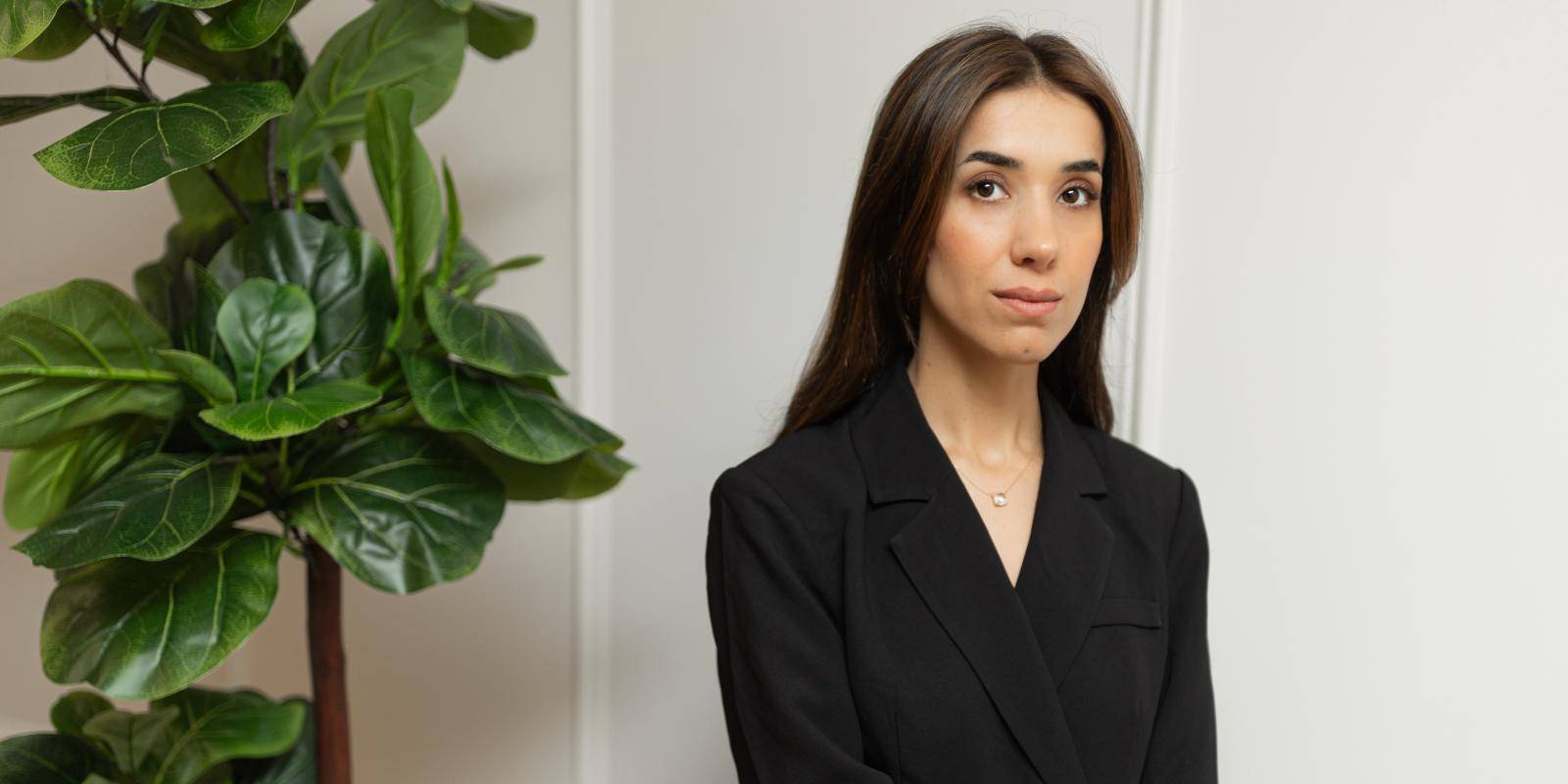


Nadia Murad is an Iraqi-born Yazidi human rights activist. In 2014, Islamic State attacked her village, Kocho, in Sinjar, northern Iraq, killing many, including Murad’s mother and six brothers, and imprisoning her. The ISIS genocide claimed around 5,000 lives and forced thousands of Yazidi women and girls into sexual slavery. After escaping captivity, she became an advocate for justice and survivor-centred recovery and was awarded the Nobel Peace Prize in 2018 for her efforts to end sexual violence as a weapon of war. She founded Nadia’s Initiative to help rebuild communities in crisis and advance the rights of women and survivors worldwide.
Your first book was published in 2017, which documents the three months you were held captive, raped and tortured by ISIS. Why did you decide to write your new book ‘I Choose My Beginning: A Story of Courage and Activism’?
I wrote my first book during a very difficult time of my life. I was still receiving news about family members who were missing, in captivity or who had been killed. I believed it was important to tell the world that rape isn’t just a small side effect of war, and it comes at a very high personal cost. It was a testimony to document what ISIS did while my memory was fresh.
In my second book, I discuss those crimes, but they are only part of why I do what I do. I tell the stories of other women, and of what came after my escape, including rescuing other captives. Yes my community, the Yazidis, became known for the crimes committed against us. But equally important is the feminism I inherited from my spirited mother; my relationship with my now-husband and my independence since captivity, which includes telling my story on my own terms and becoming a real activist, student and wife.
You write about the pressures of being an activist. What were they?
In my community in Iraq, women are always expected to act in a certain way. But being an activist was on a new level. If you talk about rape, there are expectations to dress in a certain way – and even smiling can make people doubt your testimony. These expectations were the hardest part.
I loved make-up growing up and I had this crazy idea of opening a beauty salon. And then suddenly [after I escaped from ISIS] I was told to make my whole life about activism, to never say no to an interview, a meeting or a speech. I don’t think that makes you a perfect activist. I was close to giving up.
In 2022, several countries, including the UK, Canada and Ukraine, adopted the Murad Code, a global set of standards for interviewing survivors of conflict-related sexual violence. Why did you create this and what are its aims?
It’s a short document that I created together with other survivors, the British government and other partners to give information to those who are interested in documenting conflict-related sexual violence on how to give survivors the chance to share what they want to share while ensuring that they don’t re-traumatize them. A lot of people have good intentions when they document rape as a weapon of war, but many don’t know how to approach survivors.
My sisters and I grew up in a small remote village, and we didn’t know the difference between a prosecutor, a journalist and an aid worker. Often, we would give our story without knowing what would happen to it. UN Women now uses the code. Journalists, NGOs and governments are also using it. When I was in Ukraine, I met survivors who had a copy of the code in their own language, and that showed it’s having an impact.
How did you balance the pursuit of personal justice for your family and friends with your advocacy for other survivors of sexual violence?
When you’re an activist, you can’t just focus on personal justice for yourself and your family. The moment I realized that rape as a weapon of war is not unique to Iraq, I realized that my community was bigger than the Yazidis: it’s the worldwide community of survivors of conflict-related sexual violence.
On the other hand, my family and I just want closure. You can’t move forward when you know that the remains of your loved ones are in a building in Baghdad waiting to be identified. We don’t know where my niece, Nasreen, was buried. Justice for her mother and my family means finding her and burying her in our homeland.
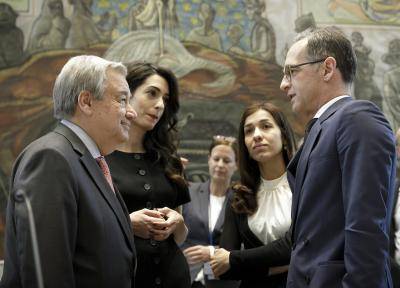
Nadia Murad, third right, with her lawyer Amal Clooney, UN secretary-general António Guterres, left, and Heiko Mass, the then German foreign minister, at a UN Security Council meeting in 2019 to discuss sexual violence in conflict. Photo: Thomas Koehler/ Getty Images.
When I first met my lawyer, Amal Clooney, she said that even with all the evidence we have, the road to justice is long, and it can be dark, and we will have to be patient. She said we might work for years bringing evidence and testimonies, and we may not get the result we want, but the fight for justice is worth it.
In 2021, a former member of ISIS was convicted of genocide in a German court, the world’s first judgment on atrocities against the Yazidis. Several other convictions followed. How has the Yazidi community responded to those?
Those prosecutions were important not just for Yazidis, but for survivors globally. The very first case was in Germany where my cousin was the victim [she and her daughter were enslaved by ISIS in 2015] and it gave hope by sending a clear message that anyone who has committed such crimes and comes to Germany will be prosecuted.
But a lot of the time, Yazidis are looking for Iraq to deliver justice at home. The survivors and their testimonies are there, and UNITAD, the UN team created to collect and preserve evidence of war crimes, crimes against humanity and genocide committed by ISIS, has all the evidence stored in a building in New York. Everything is there, so why is our own country prosecuting them as members of a terrorist organization instead of charging them for raping nine-year-old girls and killing children?