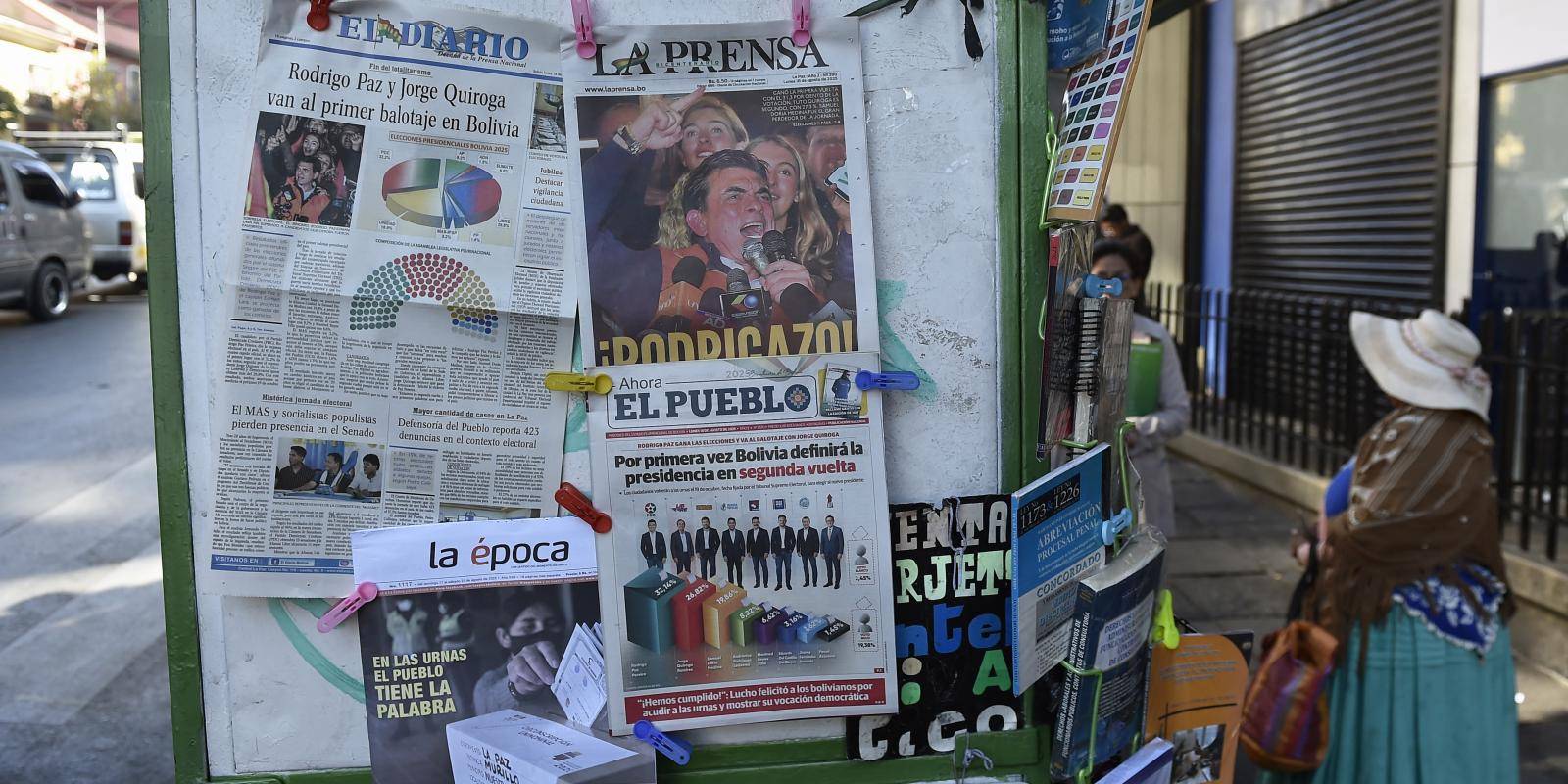

On 17 August, Bolivian voters massively rejected the once powerful leftist party Movimiento al Socialismo (MAS) after nearly 20 years in power. In the early 2000s, MAS and its founder Evo Morales, a former coca growers’ union leader, had become a symbol of what many saw as a new era of political inclusion of the indigenous and poor across Latin America. To others, it was a tide of radical leftist autocrats.
But after two decades of consolidation of personal power, scandal and economic collapse, Bolivian voters want change. The two presidential candidates going through to second round elections on 19 October are the centre-right senator Rodrigo Paz and the conservative former interim president (2001-02) Jorge ‘Tuto’ Quiroga, a long-standing MAS opponent.
The first round MAS candidate Eduardo del Castillo managed only 3 per cent of the popular vote. In the congressional elections held the same day, the socialist party secured only one seat. The question is what will happen to the legacy of MAS, both the good – giving political voice to Bolivia’s indigenous population – and the bad – Morales’ waning cult of personality, polarization and economic collapse.
More importantly perhaps is what MAS’s resounding defeat will mean for Latin America’s once powerful, anti-democratic left-wing governments – still present in Cuba, Nicaragua and Venezuela – and Bolivia’s close relations with China.
The past is not precedent
Two decades ago, MAS seemed almost invincible. Its founder Morales was elected president and the party was voted into congress. Morales, an indigenous Aymara, became the new face of what many believed was a more inclusive, representative party system in the majority indigenous country. Two years after his election, President Morales convened a constituent assembly that rewrote the constitution, intended to reflect the new popular and political balance of power. This included the popular election of all judges, new rights granted to the indigenous and Afro-descendant populations and a new name for the country: the Plurinational State of Bolivia.
But by 2025 Bolivians were fed up. According to a pre-election poll, more than 93 per cent of voters believed the country’s situation was bad or very bad. It is not hard to imagine why. Bolivia’s economy experienced a boom shortly after Morales was sworn in in 2006 due to rising commodity prices. The country benefited especially from an uptick in global natural gas prices in which the country is well endowed.
After 100 days in office, the Morales government nationalized Bolivia’s oil and gas industry. Initially, the windfall of gas exports was ploughed into social welfare programmes that reduced poverty and eased the price of energy and foodstuffs through general subsidies.
Amid skyrocketing global hydrocarbon prices, even Morales’ sudden expropriation of the country’s gas field was not enough to discourage investment. But in a time-worn story, gas prices eventually fell as discoveries were made elsewhere, and the state-owned gas company failed to invest to maintain production and save.
By 2024, the economy was limping along at just over 1 per cent growth. Today, central bank reserves are almost depleted, inflation reached 23 per cent in June and the country has been forced to import fuel. This has resulted in fuel shortages and soaring food prices that have made basic essentials unaffordable for many citizens.
Challenges facing the new president
Beyond the legacy of economic failure, whoever wins the 19 October run-off will have to face the hangover of Morales’ cult of personality and his loyal base. Banned from running for re-election and holed up in a jungle compound to avoid arrest for statutory rape, Morales called on his followers to invalidate their ballots on 17 August in an effort to delegitimize the election. While the spoilt ballots only amounted to roughly 19 per cent, less than either of the two frontrunners scored, it marked another turn in Morales’ scorched earth, street-based politics.
It is also a warning for the future. Despite their massive loss of popularity at the ballot box, the former president and his party are unlikely to remain on the sidelines for very long.
In the 20 or so years since he first rose to prominence, the 65-year-old Morales has used all possible means to stay close to power, including street protests, a constitutional rewrite, attempted electoral fraud, and the above-mentioned attempt to delegitimize elections he was banned from competing in.
His broad personal legacy may be badly tarnished, but he has a loyal base of followers – many of whom are now defending his compound should police attempt to arrest him.