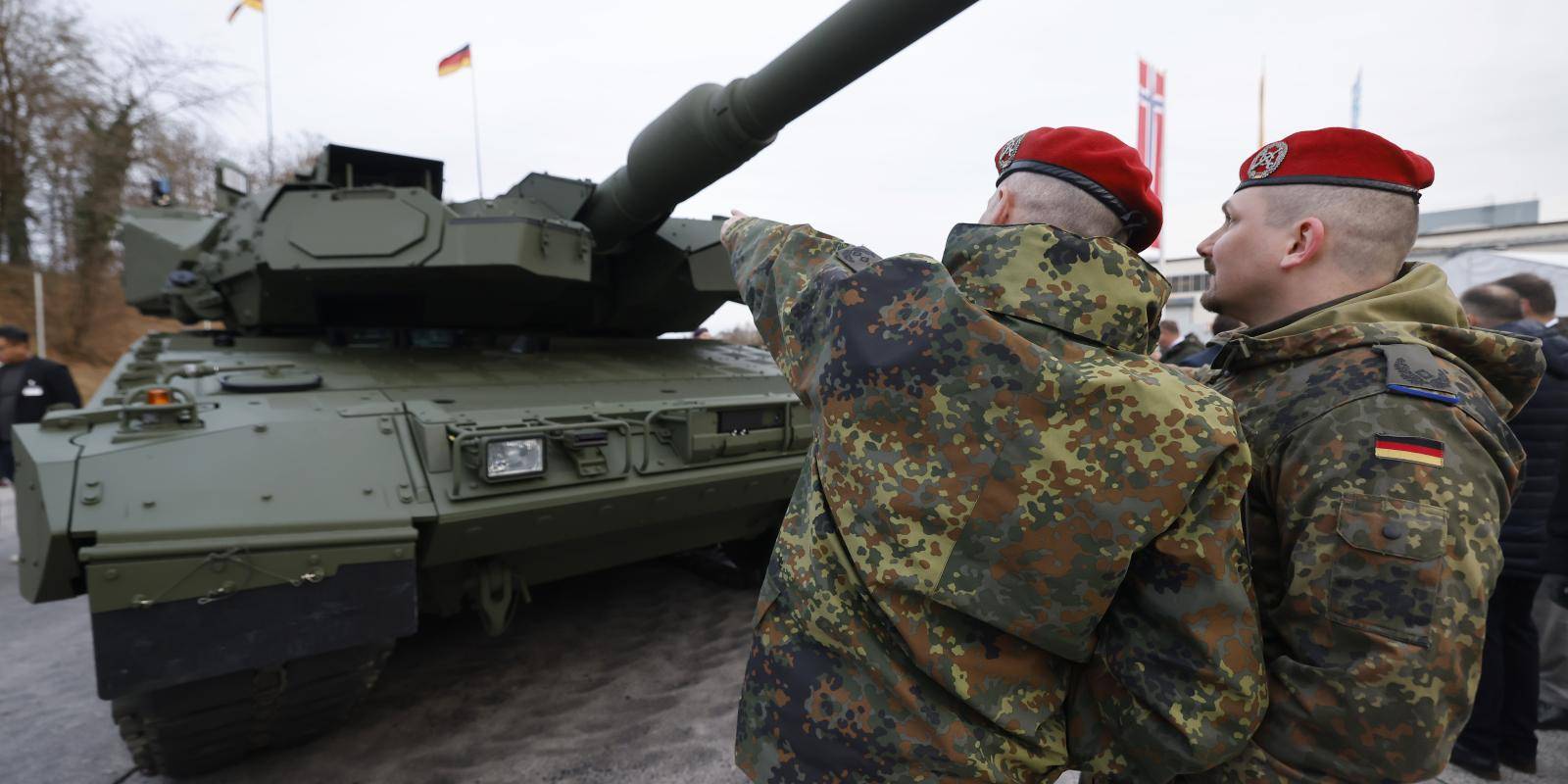

‘Zeitenwende’ – that deliberately weighty term coined by former German Chancellor Olaf Scholz following Russia’s invasion of Ukraine – described a watershed era. It proposed not a policy adjustment, but a real rupture in Germany’s strategic posture. Yet it is only over the past year, under Chancellor Friedrich Merz, that the full measure of what it entails has become clear.
This is not merely higher defence spending. It is a redefinition of Germany’s place in Europe, and of Europe’s dependence on Germany.
Zeitenwende was never just about budgets or brigades. It required that Germany, long accustomed to exercising influence through economic might, must assume the burdens of strategic agency in Europe and translate its latent power into strategic leadership.
That is an almost psychological challenge for a country whose political culture has been shaped by a tradition of restraint, especially regarding the use of its military.
Rearmament without doctrine risks strategic incoherence
Germany’s scale, fiscal capacity, and centrality within the European economy all point in one direction: if Europe is to acquire the strategic coherence needed to defend itself, Berlin will be an unavoidable and increasingly assertive player.
Germany is already moving. An €100 billion special fund has been established for the Bundeswehr (Germany’s armed forces). F-35 aircraft are being procured to replace the Tornado in Germany’s NATO nuclear-sharing role, with first deliveries scheduled for 2026. Defence spending is rising steadily beyond 2 per cent. All signal a shift that would have been politically inconceivable a decade ago.
Be that as it may, inevitability is generally a poor guide to political reality. Power cannot simply be accumulated; it has to be translated – into doctrine, usable force, and a culture of decision.
Here, Germany’s trajectory remains uncertain. Berlin has yet to articulate a coherent military strategy that matches its financial commitments. The Federal Ministry of Defence has developed a Military Strategy for the Armed Forces, to complement the 2023 National Security Strategy.
But these documents remain a framework rather than a doctrine. They signal political intent but do not resolve trade-offs between territorial defence, expeditionary commitments, and industrial mobilization. In practice, Germany continues to rely heavily on NATO planning and American enablers – a dependence exposed as politically fragile amid renewed tensions with a more transactional White House under Donald Trump.
Rearmament, in this sense, risks outpacing strategy – not because strategy is absent, but because it is still being worked out, and under conditions of exceptional geopolitical pressure.
The Bundeswehr: paper tiger?
The Bundeswehr illustrates the gap between resources and readiness. Despite new funding, deficiencies persist in equipment availability, ammunition stocks, and procurement speed.
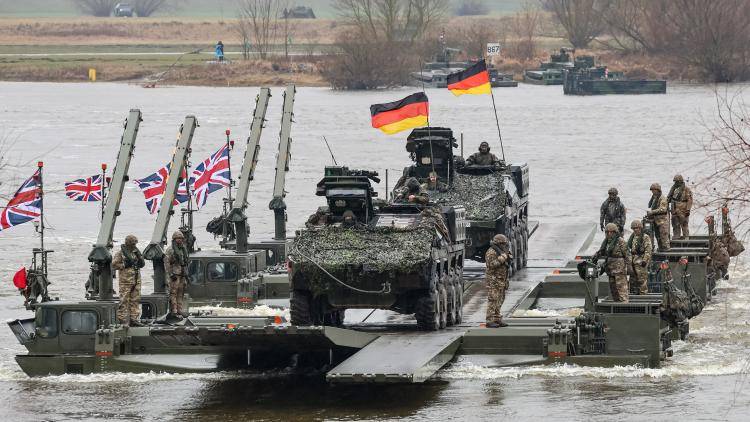
The challenge is not only one of volume, but of usability. Germany has pledged to provide combat-ready formations for NATO, yet progress on assembling fully equipped and deployable brigades is slow and troublesome.
Efforts to permanently station a brigade in Lithuania are putting additional pressure on already stretched Bundeswehr units at home. And delays in delivery of everything from communications systems to armoured vehicles point to deep institutional inertia.
This is a serious problem: a superpower is not defined by how much it spends, but by how quickly and coherently it can convert resources into deployable military assets. Germany is still struggling with that conversion.
The growing burden of domestic politics
It would be a mistake, however, to treat rearmament as a mere budgetary episode. It is a generational commitment made in the context of a rapidly fragmenting political landscape.
Indeed, German coalition politics has rarely appeared more brittle. Merz’s popularity has eroded at an unusually rapid pace for a new chancellor. His government struggles to maintain cohesion, while the AfD is surging to historic polling highs and looks poised for further significant breakthroughs in regional elections. Defence is increasingly drawn into ideological debate.
An effort to send German Leopard 2 tanks to Ukraine in 2023 is instructive: what might have been a straightforward decision became a prolonged domestic and diplomatic negotiation, with Berlin ultimately moving in step with Washington. Any country that must constantly renegotiate its strategic direction risks discovering that time becomes its adversary.
Germany’s federal, decentralized government structure – instrumental in the country’s post-war economic miracle – is part of the problem, creating delay when speed and coherence are required.
That is not to suggest that greater centralization in Berlin would, in itself, yield sounder decisions; the French presidency has shown that concentration of power does not preclude misjudgement.
The end of the German miracle?
Beneath this sits a deeper constraint: the condition of Germany’s economic model. The industrial system that underpinned its post-war success – export-driven, energy-intensive, and anchored in incremental excellence – now faces pressures it was not designed to absorb.
The end of cheap Russian gas has forced an abrupt and costly recalibration on energy supply.
German car manufacturers face intensifying Chinese competition domestically, while vital exports to China are in decline. Only patient and strategic diversification could cushion that blow.
Germany has also failed to seize the digital turning point, with SAP its only truly globally leading tech firm. That points to a need for a more deliberate state-led push: mobilizing capital at scale, deepening links between industry and tech, and creating the conditions for rapid digital growth.
Merz’s push to loosen the EU’s industrial AI regulation points in the right direction – an attempt to ease constraints on innovation and restore some of the agility Germany missed in the first wave of digitalization.
But to rejuvenate its economy and compete on increasingly contested global markets, Germany needs not only efficiency, but adaptability, scale, and speed. It can still produce extraordinarily well; the question is whether it can pivot with sufficient rapidity while also underwriting a sustained defence effort.
Economic culture will be a significant hurdle. Germany’s corporate model – spanning the Mittelstand and segments of its listed sector, and marked by long-term and often family-based ownership – privileges continuity over disruption, prudence over risk.
Defence transformation, by contrast, tends to favour precisely those qualities that German capitalism has historically moderated: large-scale, rapid integration, and intimate relations between state and industry.
Do not underestimate the resistance to German power revival
As Germany grows into its role, it will inevitably reshape the European balance by sheer gravity. Partners will look to Berlin for direction while simultaneously resisting its predominance. Power, in Europe, rarely consolidates without generating counter-currents: Germany will not escape that pattern.