More than a year on from the re-election of Donald Trump as US president, countries are grappling with a rapidly changing international order in security and in economics which many of them also seek to shape. The US has made clear that its protection of its allies is limited, while simultaneously demonstrating a willingness to project force well beyond its borders. It has reset, several times, the terms on which it trades with the world. China has declared that it aims to be the architect of the evolving world order but its desire to resolve conflicts appears small. Other countries and regions, from the Middle East to Europe, Latin America, Africa and China’s Asian neighbours seek a path between the two superpowers.
One question is what should be preserved of the old order. Is international law resented as a construction of the West; can countries and companies globally see it as in their interest to embrace it? Can the WTO and the IMF be saved? The United Nations itself? Are agreements on health cooperation needed to counter a new pandemic? Is there still hope for a coordinated response to newer challenges: environmental change and AI?
Agreement on new forms of order is emerging, however, as countries including the Global South see their chance to shape an evolving order. Regional blocs are strengthening, and governments are pursuing partial agreements on defence, the environment and trade even though global pacts are now out of reach.
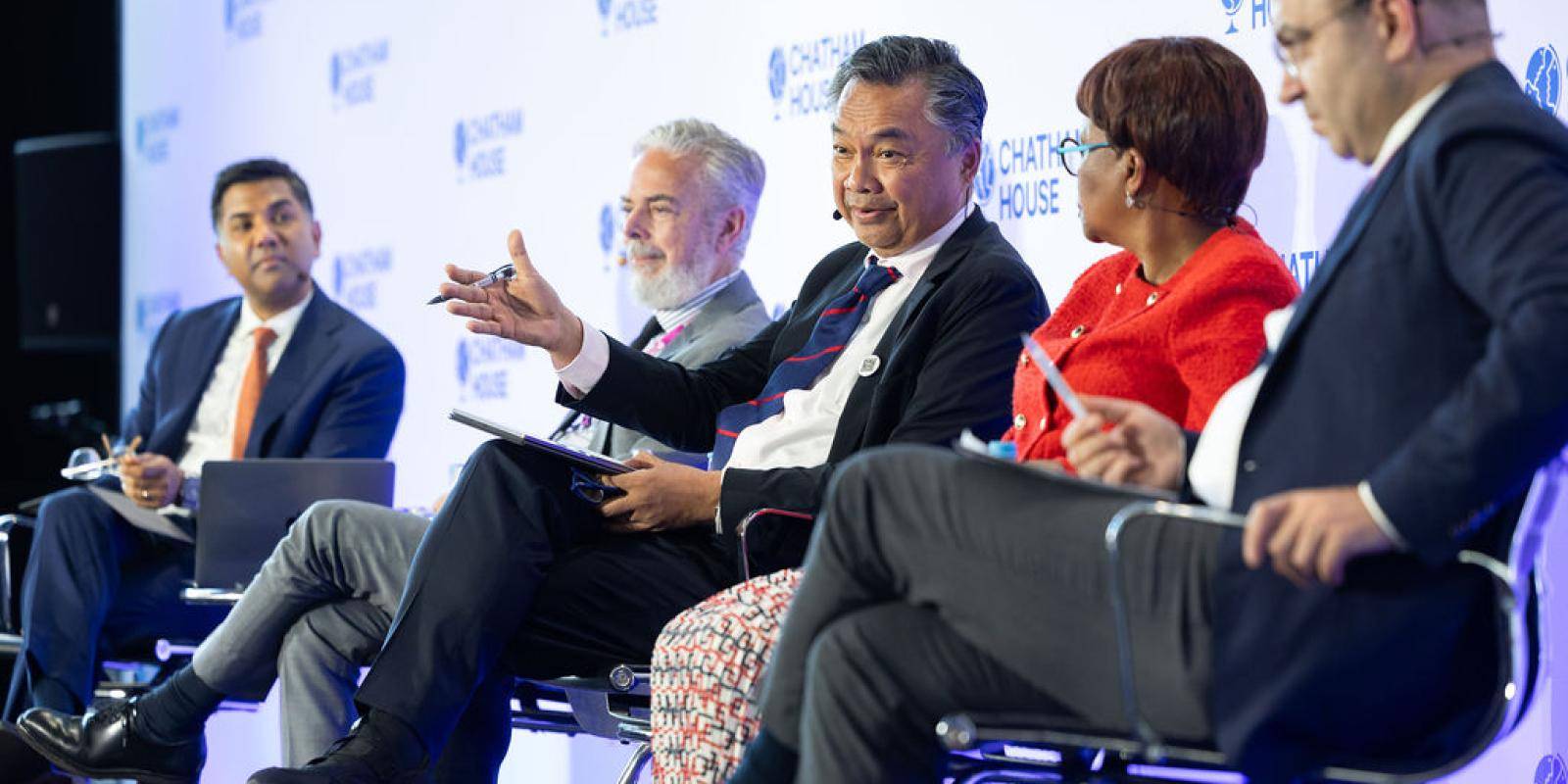
The 2026 London Conference, the 11th edition of Chatham House’s flagship event, brings together leading voices from government, business, international institutions and universities to propose a route to greater order in an evolving world.
Venue: One Great George Street, Westminster, London SW1P 3AA
#CHLondon