
The US-Israeli war with Iran is fundamentally changing how Tehran views Russia. Moscow was previously perceived by some in Tehran as an unreliable partner that benefited disproportionately from Iran’s support. But Russia is now increasingly seen as an important partner to ensure Iran’s military survival, post-war reconstruction and long-term deterrence.
Positive meetings
In October alone, senior Iranian and Russian officials held three high-level meetings, reflecting the growing importance both governments attach to the partnership.
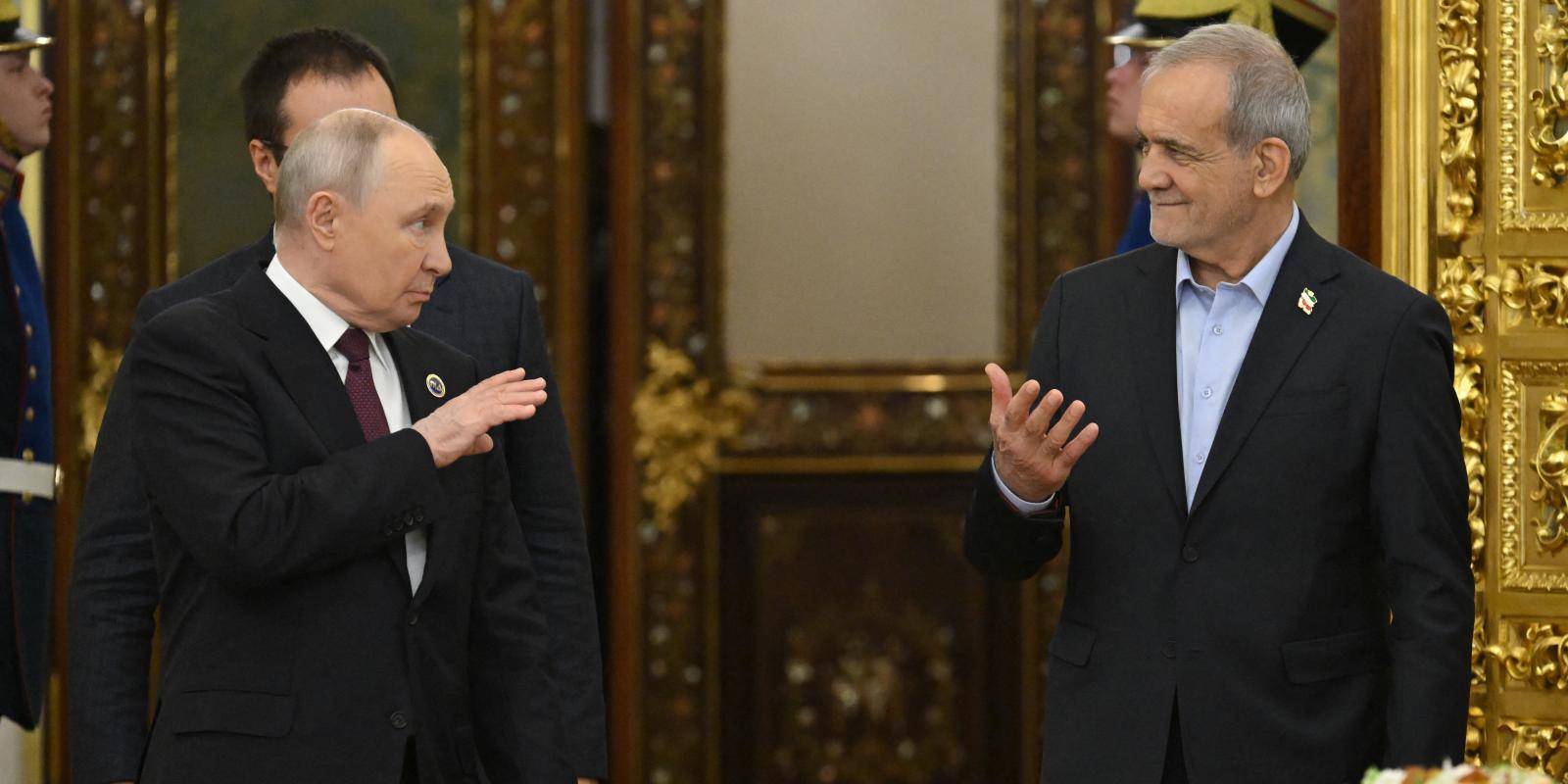
On 8 October, Iran’s president Masoud Pezeshkian met Russian president Vladimir Putin in Turkmenistan on the sidelines of regional summit meetings. They emphasized the mutual political will to deepen ties across virtually every sector, including trade and economic cooperation.
On 19 October, Russia’s foreign minister Sergei Lavrov travelled to Tehran for the first since the war began on 28 February. He met President Pezeshkian, Foreign Minister Abbas Araghchi and Supreme National Security Council head Mohsen Rezaei. They discussed energy, transport and broader bilateral relations. The meetings emphasized the need to advance the comprehensive strategic partnership signed in January 2025, continuing economic and investment cooperation despite the challenges posed by the war.
After the meetings, Araghchi stated: ‘never in our history have Iran and Russia worked as closely as now.’ Pezeshkian thanked Russia for its support during the war. Security chief Rezaei also emphasized Tehran’s determination to strengthen strategic cooperation with Moscow, indicating that Iran’s security leadership also supports closer relations.
On 27 October, Pezeshkian visited Moscow to attend the Gas Exporting Countries Forum, where he again held talks on bilateral cooperation with Putin. Pezeshkian thanked Putin for ‘backing and assistance’ in both political and economic matters. Putin said that bilateral trade increased by 10.4 per cent during the first eight months of 2026.
Putin also reaffirmed Moscow’s commitment to ongoing projects, including the Bushehr nuclear power plant. Russia’s state-owned nuclear corporation, Rosatom, announced it would increase the number of its construction workers at Bushehr to 200. Rosatom had evacuated its staff after the outbreak of the war.
Outside of this nuclear development, the substance of these meetings was not significantly different to previous high-level exchanges. What stands out, however, is the increasingly positive tone of public statements by senior figures across Iran’s political and security establishment. This suggests a more favourable assessment of Russia’s strategic value, although it does not necessarily indicate a fundamental change in the views of all Iranian decisionmakers.
Moving beyond scepticism
This enthusiasm contrasts with earlier doubts within Tehran about the benefits of investing in Moscow as an ally. Elements of the Iranian leadership have long held a deep-seated scepticism towards Russia.
This scepticism had grown since late 2022 as some in Tehran questioned the returns on its support for Russia’s war in Ukraine. Iran has supplied Russia with thousands of drones, including Shahed-131 and Shahed-136 models, along with other military assistance. Iran has publicly denied involvement in the conflict, but admitted it had sent drones to Russia before the full-scale invasion of Ukraine, and Iranian officials told Reuters months into the war that Tehran had agreed to supply more drones and missiles.
Leaked contract documents indicate that Russia agreed to pay approximately $290,000 per drone for a bulk purchase of 2,000 Shahed-136 drones, although the extent to which these payments were completed remains unclear. Iran has also reportedly helped to establish production facilities in Russia, enabling Moscow to domestically manufacture a modified version of Iran’s Shahed-136 drone named Geran-2.
However, influential voices in Tehran have often questioned the strategic alliance with Moscow. One former IRGC naval commander said ‘There is a view that Russia sought to drag Iran into that [Ukraine] war … so it would not be alone and the pressure of sanctions would increase on Iran.’ In 2022, the US and EU imposed additional sanctions on Iran over its sales of drones to Russia. During Lavrov’s previous visit to Tehran in February 2025, Iranian commentators warned that Moscow might use Iran as a bargaining chip in negotiations with Washington over Ukraine.
Critics of closer relations have also argued that Russia was benefiting disproportionately from Tehran’s support, without providing comparable assistance in return. In particular, Tehran felt Russia did not significantly come to its aid during the 12-day war between Iran and Israel in June 2025. Russia failed to deliver advanced weapons systems that Iran said it had purchased before the war, such as SU-35 fighter jets.
Support for closer cooperation
The US-Israeli war appears to have prompted a reassessment of Russia’s value to Tehran. According to several reports, Russia provided Iran with intelligence on US military positions, satellite imagery for targeting, and weapons components. It is difficult to assess the real battlefield impact of Russian support. However, despite President Donald Trump’s statement that Moscow and Beijing have not been helping Tehran, the evidence suggests otherwise.
Such support is likely to have strengthened the position of those within Iran’s security establishment who have long advocated closer ties with Moscow. For this group, who were supported by the late former president, Ebrahim Raisi, the war has vindicated their longstanding argument that closer cooperation with Russia could deliver tangible strategic benefits. These include helping Iran circumvent sanctions, overcoming diplomatic isolation and countering Western pressure.
The increasingly positive statements from senior political officials such as Pezeshkian and Araghchi suggests that support for closer cooperation with Russia is becoming more widespread across the Iranian political spectrum, including among those once sceptical of close alignment with Moscow.
As Tehran prioritizes military survival, deterrence, and reconstruction in the coming months, closer cooperation with Russia will likely be increasingly seen as a strategic necessity rather than merely as a means of circumventing sanctions and resisting Western pressure. The partnership is acquiring a more immediate security rationale, serving both Iran’s current military requirements and its longer-term strategic objectives.
Consequences
In the short term, technical assistance and weapons components could help Iran withstand the conflict by sustaining capabilities degraded by months of fighting. Russian expertise could help Tehran rebuild its air defences, missile infrastructure, and defence industry. Russian intelligence could help Iranian forces track US military assets and inform operational decisions.
Russian support will be particularly valuable in the event of renewed military escalation. It could improve Iran’s ability to anticipate attacks, preserve its military capabilities and impose costs on its adversaries. However, it is unlikely to fundamentally alter the balance of power in Iran’s favour.
In the medium term, assuming the war comes to an end, Iran-Russia cooperation will likely continue with the aim of rebuilding Iran’s military capabilities. This would likely focus on air defence, drones and missile technology.
While Russia’s capacity to meet Iran’s demands will remain constrained by its war in Ukraine and pressure on its defence industry, even selective transfers of technology and expertise would help Tehran address its vulnerabilities and accelerate the restoration of its deterrent capabilities. For example, Russia could provide replacement components for the S-300 missile defence system as well as electronic warfare technology.
In the longer term, the most consequential outcome could be the institutionalization of military cooperation between Iran and Russia. Iranian policymakers will remain wary of Russia’s tendency to prioritize its own interests and the absence of a binding security guarantee. But the relationship is likely to become increasingly central in future military planning, procurement and defence-industrial cooperation. This will likely increase Iran’s ability to withstand US military and economic pressure, albeit without being a game changer in the balance of power.
The war may not have transformed Russia into a reliable security guarantor for Iran, but it could make Moscow a more enduring component of Tehran’s security strategy. This will ensure the partnership is harder to reverse, no matter who is in power.