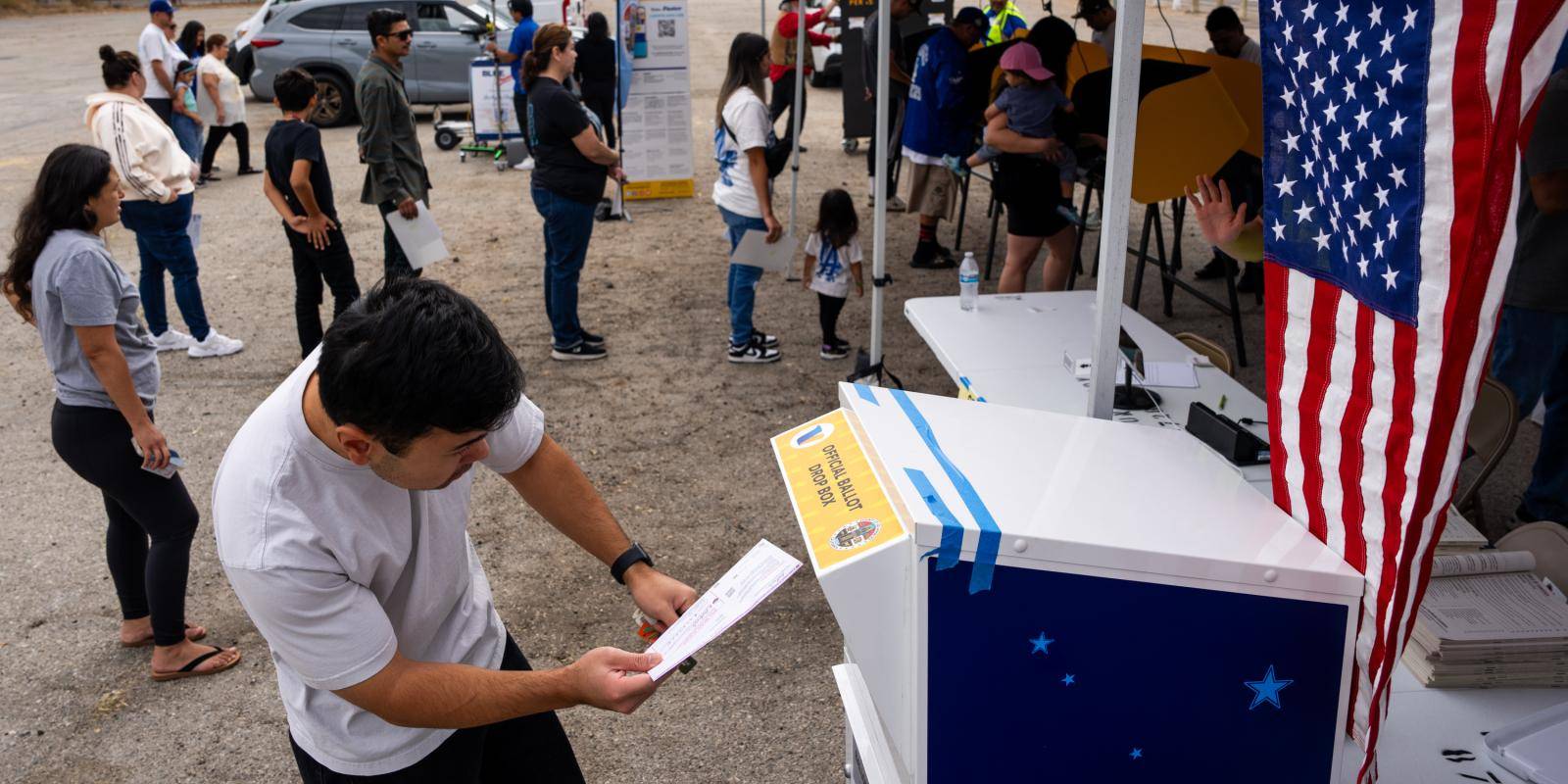

The United States’ midterm elections are less than two months away and signs are already emerging that the Republican party could suffer significant losses. All 435 members of the House of Representatives and 35 Senators are up for election on 3 November, with current polling suggesting that President Donald Trump could lose his Republican majority in at least one chamber of Congress.
This would not be an unusual outcome for an election that often punishes the sitting party. Since the Second World War, the party controlling Congress has lost Congressional seats in all but two midterms, and at least one chamber of Congress has flipped in the past five elections.
But the stakes of these midterms are made higher by Trump’s repeated signalling that he might not accept the outcome if defeated. Equally troubling are his administration’s apparent efforts over recent months to disenfranchise voters in areas of traditional Democratic strength.
All of this raises the prospect of a political crisis erupting in November, which the country’s checks and balances are increasingly ill-equipped to manage. With another presidential election only two years away, can US democracy respond?
Threat of a Democrat win
Republicans currently hold a majority in both the House of Representatives and the Senate. Opinion polling of voter intentions shows that Democrats have a single-digit advantage nationwide, a margin that historically has meant winning a majority of seats on election day.
This scenario is threatening to Trump. Even if the Democrats win only one chamber of Congress, the president and members of his administration face the prospect of two years of Congressional investigations. These might include corporate donors and alleged ‘pay-to-play’ arrangements, and investments by foreign sovereign wealth funds in Trump family-linked businesses.
The Supreme Court has ruled that the president has legal immunity for almost all actions, but Trump could still face a legacy-tarnishing third impeachment vote in the House. This process – and other Congressional hearings – could stymie what might remain of the Republican legislative agenda and provide a powerful incentive for Trump and those around him to undermine the outcome of the election.
In many ways, this subversion has already begun. When Trump narrowly lost the presidential election to Joe Biden in 2020, he claimed that the result was rigged and stolen. Since then, he has repeatedly sown seeds of doubt about the integrity of the US electoral system and the unfairness of the upcoming 2026 Congressional election.
In a televised address to the nation in July, he reiterated claims about widespread voter fraud in the 2020 election and accused China of interfering in America’s ‘dangerously exposed’ electoral system. ‘No country can be great without fair and honest elections,’ he said. ‘Unfortunately, the system we have falls catastrophically short of that standard.’
Many Democrats see this as an attempt to undermine voter confidence in the run-up to the midterms. Current polling shows that only 58 per cent of Democrats expect a free and fair election in November, down from 81 per cent four years ago. Interestingly, the proportion of Republicans who believe the same has increased from 46 per cent to 55 per cent.
The fact that Trump has not ruled out running for president in 2028 – saying recently ‘I won [the presidency] three times. Now, I’m going to do it again,’ raises other constitutional questions and destabilizes the status quo ante further.
Voter suppression
Trump is also trying to undermine the election in more overt ways; primarily by making it harder for Americans to vote. Since returning to office, he has been pressing Congress to pass the SAVE America Act, legislation that would require proof of citizenship to register to vote, insist on photo ID to cast a ballot and scale back postal voting. The legislation has passed the House, first in 2025 and then again in 2026, but the Senate has not acted.
Most immediately, this would affect the estimated 9 per cent of voting age Americans – some 22 million people – who cannot readily access proof of citizenship. Yet in demanding enactment of this legislation before the election, Trump is fuelling the false assertion that thousands of undocumented people vote.
The president’s efforts to restrict postal voting have ramped up in recent months – despite having recently voted remotely in Florida’s primary elections himself. In March, he issued an executive order instructing the US postal service to only deliver ballots to citizens on a federal list of eligible voters.
This order is now being challenged in court. If the court rules in the administration’s favour, more Democrats than Republicans may be denied their preferred means of voting (in 2022, 36 per cent of votes cast were postal, 60 per cent of which were Democrats, 38 per cent Republicans).
Added to this are the ongoing efforts by the Republican party – and to a lesser extent the Democrats – to favourably redraw congressional maps to help gain seats. The cumulative effect of these redistricting campaigns could distort the outcome of November’s elections further.
Immediate aftermath
This interference may continue after election day. In the first instance, were the administration to allege fraud, compliant local officials could try to seize ballots or voting machines, as they attempted in 2020. Disputing the integrity of the voting process could result in a situation where the outcome is not declared for weeks, leading to lengthy recounts and appeals.
All of which would significantly undermine the ability of government to function, particularly if these delays drag into January, when the new Congress is supposed to take office. In the American democratic system, the responsibility to respond to such an overreach would fall on Congress and the courts, which are expected to counterbalance the executive branch.

But in Trump’s second term the Republican-controlled House and Senate have rarely challenged his actions. The fact that Congress will not be in session during much of the autumn further reduces its role in restraining any attempt at electoral subversion.
This leaves the Justice Department with the most significant remaining oversight, yet its independence has come into question in recent years. When asked last month about the department’s commitment to act independently from the White House, Trump’s new Attorney General, Todd Blanche, said: ‘I’m not going to pledge that.’ His stance breaks with the post-Watergate practice of a firewall between the Justice Department and the White House intended to ensure there is no political influence over criminal investigations.
Moreover, in the face of adverse court rulings the Trump administration has engaged in ‘legalistic noncompliance’ to evade judicial orders, including the court’s challenge to Trump’s dismantling of the USAID.
The tools that the Democrats have to respond to electoral interference are limited. If they regain control of at least one house of Congress in November, they will be able to investigate voter suppression by the administration. But unless Democrats win both the House and the Senate, they will be unlikely to pass legislation to curb such activities, and if they do Trump could veto it. The Democrats would lack the two-thirds majority in both houses necessary to override him.